
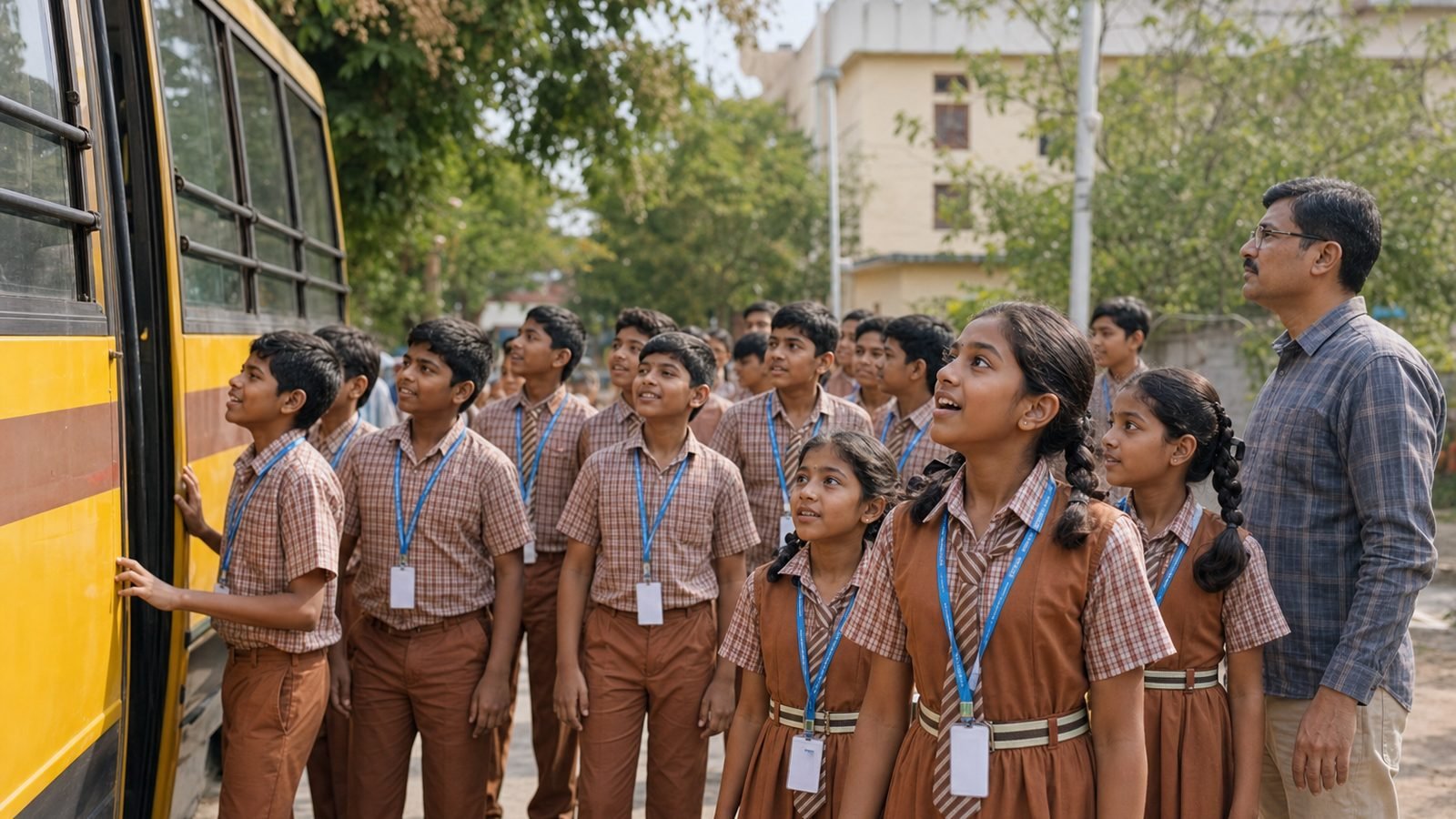
When the Kranthi school bus pulls out of Bapu Nagar with a class aboard, something changes in the students before it has travelled a kilometre. Posture straightens. Questions multiply. The same children who need coaxing to raise a hand in class are suddenly pointing, asking, noticing. This is the quiet magic of the educational tour: taking learning out of the classroom wakes it up.
Field visits have been part of the Kranthi High School calendar for years, and they earn their place. A well-planned tour is not a holiday from the syllabus — it is the syllabus, encountered in the real world.
Why Seeing Beats Describing
A textbook can describe a historical monument, a science centre, or a working farm; standing in front of one is a different kind of knowledge. Students retain what they experience with their senses far better than what they only read. A history lesson attaches itself to the stone of an actual monument. A science concept clicks when a museum exhibit lets you turn the handle yourself. Geography stops being a map and becomes a landscape you have stood inside.
Teachers see the payoff for weeks afterwards. Classroom discussions reference the visit. Essays gain concrete detail. Students who struggled with a chapter suddenly have a memory to anchor it to.
The Hidden Curriculum of a Day Out
Much of what a tour teaches has nothing to do with the destination. Students practise punctuality — the bus waits for no one. They manage their own belongings, budget their snack money, and look out for their partners in the buddy system. They queue, listen to guides, ask questions of adults who are not their teachers, and represent their school in public. For younger children especially, a day trip is a first, gentle rehearsal of independence.
Travel also mixes students in new ways. Friendships form across sections on the bus ride. Quieter children often find their voice outside the classroom's familiar hierarchy. Teachers, too, see their students differently — and students see their teachers as people, which strengthens the relationship back at school.
Planned Like a Lesson, Not an Outing
The difference between a memorable tour and a tiring one is preparation. Our visits are chosen to connect with what students are studying, and they are prepared in class beforehand: what to look for, what questions to carry, what to record. Afterwards, the experience is harvested — through discussions, written reflections, and projects — so the day's impressions settle into lasting learning.
Safety runs through every stage of planning: teacher escorts in fixed ratios, first-aid provisions, verified venues, and constant communication with parents. Families entrust us with their children, and that trust is the non-negotiable foundation of every trip.
Memories That Teach
Ask a Class X student what they remember of Class VI, and the answer is rarely a chapter — it is the day the whole class went somewhere together. Educational tours give students knowledge with a story attached, and stories are how human beings remember. That is why, year after year, the bus keeps rolling out of the gate — carrying lessons that no classroom, however smart, can deliver.
Tour Photos in the Gallery Back to Blog